
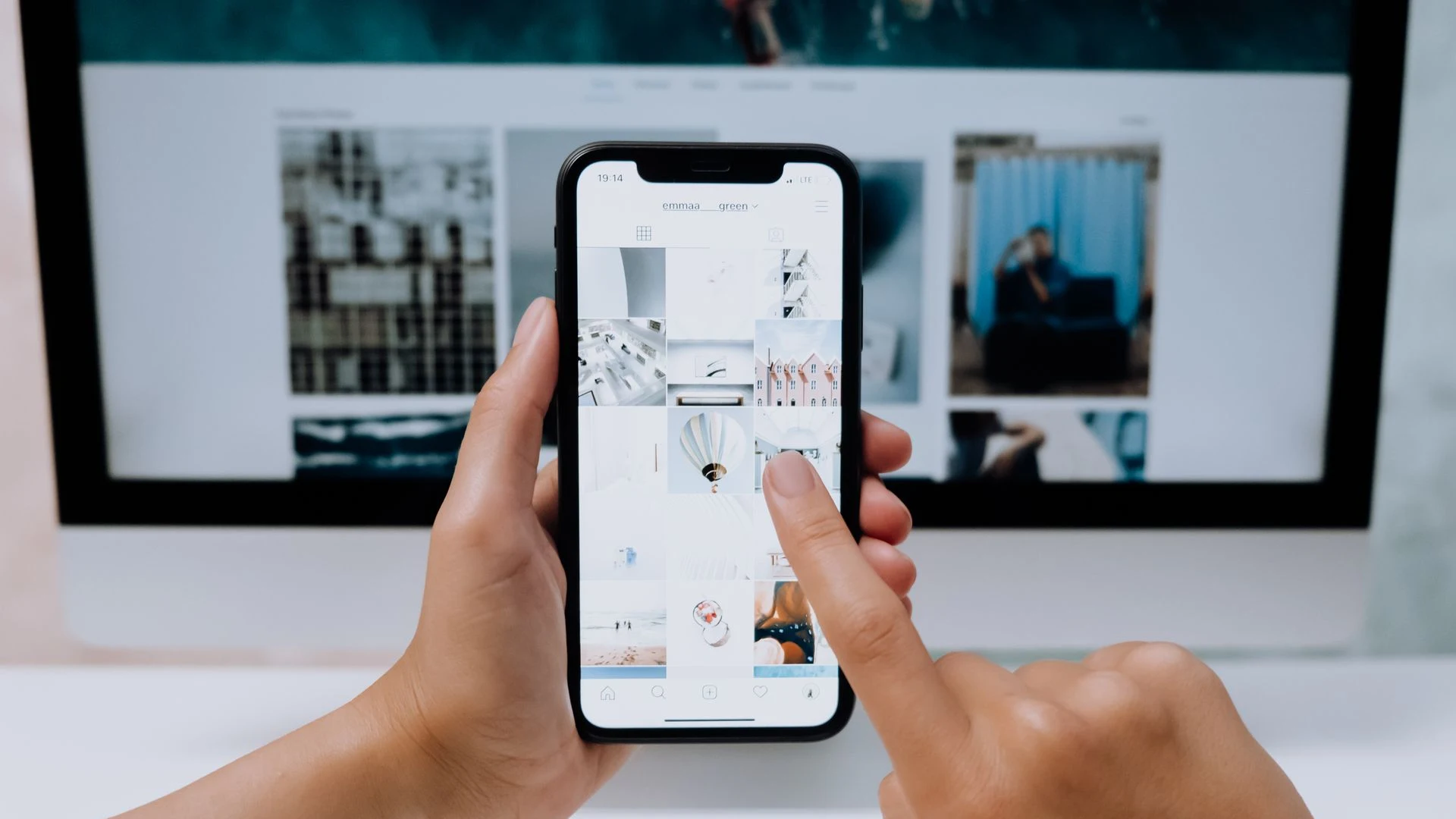
If you’re a man on a swipe app, you may know the feeling: an hour of swiping, two matches, a “hey” with no follow-up, then silence. If you’re a woman, you may know the opposite: dozens of likes in one evening, messages piling up — and still nobody you actually want to meet for coffee.
Two experiences. One too-quick conclusion: “the other sex is broken.” What if the problem isn’t men or women — but the catalogue machine?
We draw here on platform measurements and peer-reviewed experiments (Tyson et al.; Pronk & Denissen; Thomas, Binder & Matthes; Eastwick et al.) — not forum slogans.
The feeling people hesitate to name
Many men leave Tinder, Bumble or Happn feeling invisible. Many women leave feeling flooded with options — and paradoxically less and less satisfied.
The temptation is to blame “the other sex.” Forums talk about ego, standards, destruction. Those words name real pain. They misrepresent the mechanism.
The useful question isn’t “who’s wrong?” It’s: which meeting format produces both fatigues at once?
Swipe apps industrialized matching like a supermarket aisle: photos, likes, matches, messages. They widen access. They also create attention asymmetry and an illusion of abundance.
Understanding that asymmetry justifies neither resentment nor contempt. It helps stop mistaking a market effect for a truth about “men” or “women.”
An unbalanced market — not “female ego”
On most dating apps, men clearly outnumber women. Mechanical result: each female profile receives, on average, far more attention.
A classic Tinder study (Tyson et al., 2016), covering nearly half a million users in London and New York, describes a clear pattern: women are highly selective in likes; men like far more widely; women accumulate matches quickly, men slowly. See https://arxiv.org/abs/1607.01952
The authors describe a feedback loop: the more men like to compensate for scarce matches, the more selective women can afford to be — which pushes men to like even more.
A more recent Czech-app study (Mazel & Kuchar, PLOS One, 2025) confirms the same asymmetry: skewed men-to-women ratio, women in an advantageous position for received desirability, men often pursuing women more desirable than themselves. See https://journals.plos.org/plosone/article?id=10.1371/journal.pone.0327477
In plain terms: many men feel “destroyed” not because women have “too much ego,” but because they navigate a market where the supply and demand of attention are radically asymmetric.
Too many options helps no one — especially those who have the most
Here’s the paradox most debates miss. Having “too much choice” isn’t a comfortable luxury. It’s often cognitive fatigue.
Pronk and Denissen (2020) tested a “rejection mind-set” hypothesis in online dating. As potential partners keep scrolling by, people grow more pessimistic and reject more. Across studies, acceptance probability fell by about 27% from the first to the last option in the sequence. See https://doi.org/10.1177/1948550619866189
For women, that effect often came with a falling chance of mutual matches. In other words: abundance of options doesn’t necessarily open more doors — it can close the heart.
Thomas, Binder and Matthes (Computers in Human Behavior, 2021) point in the same direction: high partner availability raised fear of being single, lowered momentary self-esteem and increased choice-overload feelings. See https://doi.org/10.1016/j.chb.2021.106977
So no: women swiping under a flood of profiles aren’t necessarily “winning.” Men swiping into the void aren’t “losing” because they’re less worthy — they’re losing because the game is biased.
The catalogue is not the meeting
Finkel and colleagues (2012), in Psychological Science in the Public Interest, make a simple point: online dating expands access… but judging profiles is not the same as building a relationship. See https://doi.org/10.1177/1529100612436522
A meta-analysis by Eastwick et al. (2014) shows something even more useful: sex differences in preferences are clear on abstract targets (profiles, ideals)… and much weaker after real interaction.
In short: swiping amplifies stereotypes. Real life softens them. We too often confuse what we say we want with what actually moves us in the moment.
That’s why endless chat can paradoxically deepen gendered misunderstandings: the longer we stay in a textual ideal, the more we invest in a fiction — until the face-to-face shock.
Judging a catalogue is therefore not meeting a person. The mode of observation changes the picture — without erasing every difference, and without absolving the very real frustrations of digital dating.
What it does to men… and to women
Talking about “destruction” is too strong — and often false. But the cost for men is real: invisibility, over-swiping to compensate, silence read as a verdict on the self when it’s often a verdict on the format, pressure to perform (photos, bio, status).
The trap: leaving by hating “women.” That fixes nothing. It widens the gap.
For women, having too much choice is not the same as having happy power: noise (unwanted messages, crude proposals), decision overload, the illusion of someone better elsewhere, many likes and few lasting meetings.
The symmetric trap: concluding that “all men are useless.” Same mistake, different costume.
The real adversary is the format: asymmetric attention, ultra-fast photo judgment, near-infinite options, like/reject loops. In real life — activity, challenge, limited presence — the cues change: tone, humor, pace, cooperation.
So what can you do — concretely?
No miracle promise: leave chat earlier (public place, clear frame, consent). Voluntarily limit the catalogue: fewer profiles seen often means less rejection mind-set.
Prefer a pretext: an activity, a challenge, something to do together — so the person is no longer a product to rate.
Ask yourself: “Am I judging a profile… or a dynamic?” The first question feeds the swipe market. The second opens a meeting.
That’s exactly Daremeet’s idea: less screen, more life. Not a better swipe. A real-life meeting via a map and challenges — so men and women meet again outside the like market.
Apps won’t vanish tomorrow. But we can refuse to let a catalogue decide what we think we know about the other sex.
Conclusion
Dating apps didn’t “destroy men.” They didn’t “give women too much ego” either. They broke the attention market: like asymmetry, match famine on one side, overload and rejection mind-set on the other.
Available science describes a format, not a nature. And that format is fixed better by changing the frame than by accusing a gender.
Less virtual, more presence: when you cross paths to do something together, the other stops being a card — and becomes someone again.
Want meetings outside the catalogue?
Daremeet offers challenges and a map to meet in real life — without endless profile swiping.
Find more investigations and analysis in the Daremeet Blog.