
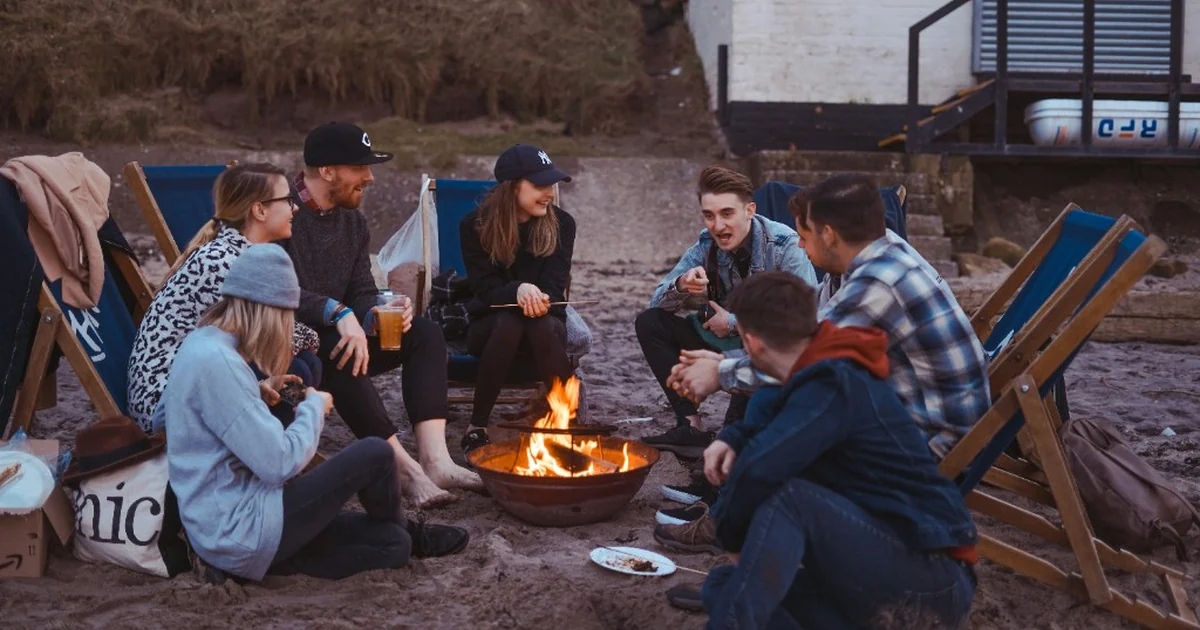
The trend is now clear: in 2026, many city dwellers are no longer just looking to “match”; they want to rebuild regular, meaningful social ties in real spaces. Clubs, associations, neighborhood activities, themed groups, and community gatherings are becoming life infrastructure again, not just weekend entertainment.
This investigation examines a broad but often under-reported shift: from fragmented interactions toward local, recurring, embodied forms of sociability. We analyze the drivers behind this movement, its impact on social well-being, and what it means for platforms that claim to support human connection.
Who this is for: anyone who wants to expand their social circle, meet people and groups, join local activities, and reduce isolation without pressure.
What changed in 2026: from transactional contact to continuity
For years, many social exchanges followed a rapid, transactional logic: short messages, quick reactions, and opportunistic invitations. In 2026, the pendulum is moving toward continuity: seeing the same people regularly, sharing activities, and building trust over time.
This shift concerns everyone: singles, newcomers to a city, young professionals, and people in relationships who simply want a richer social environment. The need is not only romantic; it is social in the broadest sense.
Sociologists describe this as “relational infrastructure”: places, schedules, rituals, and implicit rules that make connection possible. When this infrastructure weakens, loneliness rises—even with hundreds of online contacts.
Economics also play a role: heavily staged social experiences are expensive, while local collective formats (workshops, walks, volunteering, neighborhood sports) remain accessible and repeatable.
The core debate is no longer “digital versus real.” It is about social quality: does a framework help people reconnect, cooperate, and feel expected?
Field evidence: shared activities create faster trust
On-the-ground feedback is consistent: formats that gather people around a simple action (a game, walk, workshop, mutual aid, local project) generate more stable ties than purely conversational online exchanges.
The reason is simple: activity acts as social mediation. People no longer need to perform interest constantly; they do something together, and conversation follows naturally.
Local groups also function as a relational safety net. Even without immediate friendship, they provide rhythm, routine, and a baseline sense of belonging that protects against prolonged isolation.
They also create pathways: people arrive for one activity, then discover new places, initiatives, and social circles. Social capital is rebuilt step by step.
Why local communities are returning now
Three forces are accelerating this return: saturation with remote interaction, a search for concrete meaning after unstable years, and the desire for a more predictable daily life built around geographic proximity.
There is also a cultural shift: social success is no longer measured only by online visibility, but by the quality of off-screen relationships. Having a place in a local group is once again a form of lasting personal success.
Cities, associations, and third places have improved onboarding quality: clearer communication, better moderation, and more inclusive event formats. That lowers the barrier for newcomers.
Result: local community is no longer seen as a retreat. It is increasingly viewed as a resilient foundation for work, city life, and personal transitions.
Daremeet’s role: connecting people, groups, and places
Daremeet is not limited to romantic encounters: it also helps people meet others, join groups, and discover local activities. This broad positioning matches today’s social reality.
The logic is straightforward: turn social intention into situated action. A place, an activity, a clear frame. This lowers hesitation, especially for people who want to leave isolation without entering high-pressure formats.
By encouraging collective contexts, Daremeet supports progressive ties: first presence, then conversation, then sometimes friendship, projects, and occasionally romance.
That reflects 2026 priorities: many users are not initially looking for a partner—they are looking for a reliable human ecosystem around them.
The more connection is anchored in real places and shared activity, the more durable it becomes. Here, digital is useful as a bridge to action, not a substitute for it.
Boundaries, consent, and safety: the non-negotiable base
Any way of meeting people—online or offline—depends on mutual respect and the freedom to say no without pressure. Even a light challenge in public requires careful attention to the other person’s receptivity.
For first meetings, core safety principles remain essential: public settings, gradual trust, and clear reporting channels for abusive behavior. These standards apply to every interaction, including group contexts.
No long-form article can cover every edge case, but one line is clear: no harassment, no coercion, no confusion between play and intrusion. Real-world connection only works when everyone keeps agency over their space and body.
Platform responsibility and individual agency
It is too simplistic to place all responsibility on individuals. Interface design, recommendation systems, and business models shape what feels easy, visible, and rewarding.
At the same time, collective efforts—media literacy, support networks, and local education initiatives—show that digital life is a social issue, not just a personal preference.
Daremeet sits at this intersection: using digital tools to orient users toward real-world connection, with explicit norms of respect, instead of adding another layer of endless scrolling.
Conclusion: local community is becoming a social strategy again
The return of local communities is not a passing trend. It is a practical response to a form of loneliness that has become structural in many cities.
Reconnection is not about maximizing contacts. It is about rebuilding regular, nearby, human frameworks that make relationships sustainable.
In 2026, social innovation is not only technological. It is also about making everyday encounters simpler, safer, and more accessible.
Want to rebuild real-life connection?
Download Daremeet, explore activities and places near you, and join encounters at your own pace—solo or with a group, in a clear and respectful framework.
Find more investigations and analysis in the Daremeet Blog.