

The hero image is a documented street scene from March 1980: people share public space without personal smartphones—because they did not exist yet. That is not nostalgia for a “perfect” past: television and other media already shaped attention. What changed later is the density of portable screens, always-on connectivity, and the same device mixing work, news, dating, and entertainment.
This article connects that contrast with peer-reviewed and institutional sources (WHO, systematic reviews, cohort and experimental studies). It distinguishes association from causation, avoids inventing statistics, and ends with what Daremeet can realistically do: use the app as a short bridge to situated, respectful real-life interaction—not as therapy.
Who this is for: anyone who wants less endless scrolling, more in-person presence, and clear pointers to trustworthy sources.
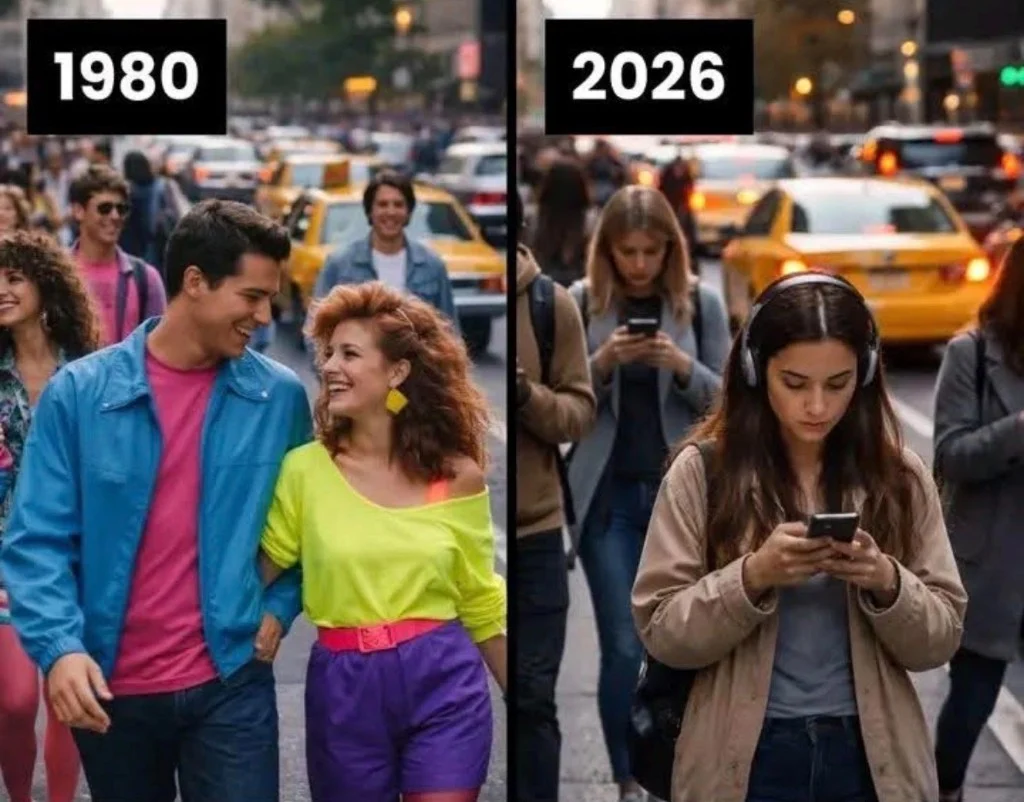
Two images, one question: where does shared attention go?
Juxtaposing a 1980 street with a 2019 scene is a pedagogical shortcut. It does not mean “everything was better before.” It highlights how personal screens can reshape the micro-ecology of public space: fewer idle conversations, less peripheral awareness, more parallel private feeds.
Research today focuses less on moralizing “screen time” as a single number and more on sleep, physical activity, sedentary behaviour, and the content and context of use—especially for children and adolescents.
Throughout this text, “association” means that two things tend to appear together in data; it does not automatically prove that one causes the other. Confounding factors (socio-economic context, prior mental health, etc.) are active research topics.
The next sections summarize a few widely cited institutional and peer-reviewed entry points. Follow the links for full wording, methods, and limitations.
Hero image credit: Gerd Eichmann, Times Square, 26 March 1980 — Wikimedia Commons file “New York-54-Times Square-1980-gje.jpg”, CC BY-SA 4.0.
WHO: physical activity, sedentary behaviour, and adolescents
The WHO publishes guidelines on physical activity and sedentary behaviour for children and adolescents (5–17 years), including limiting sedentary recreational screen time. The NCBI Bookshelf hosts the official guideline text: https://www.ncbi.nlm.nih.gov/books/NBK566046/
A peer-reviewed summary of the evidence underpinning those recommendations was published in the International Journal of Behavioral Nutrition and Physical Activity (2020): https://ijbnpa.biomedcentral.com/articles/10.1186/s12966-020-01037-z
WHO Europe also summarizes recent survey-based trends on adolescents, screens, social media, and gaming (HBSC), in accessible form: https://www.who.int/europe/news-room/25-09-2024-teens--screens-and-mental-health/
For Daremeet, the practical takeaway is modest: protecting time for movement, sleep, and in-person contact aligns with broad public-health directions—without turning apps into villains in every individual story.
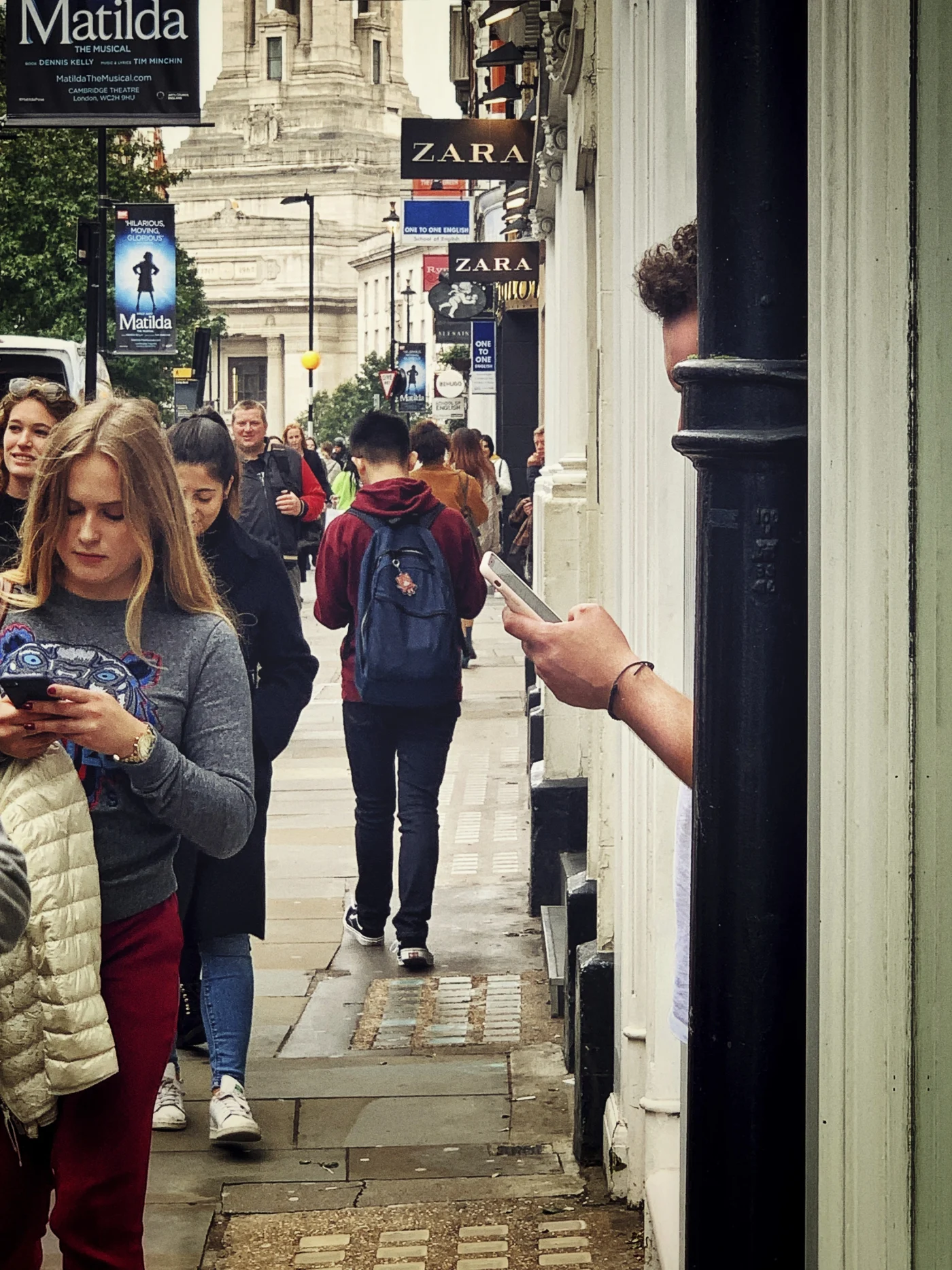
Sleep: systematic review on portable devices near bedtime
Carter et al. conducted a systematic review and meta-analysis on portable screen-based media in the sleep environment and sleep outcomes in children and adolescents; it appeared in JAMA Pediatrics (2016): https://jamanetwork.com/journals/jamapediatrics/fullarticle/2571467
The authors report associations between device access or use at bedtime and inadequate sleep quantity, poor sleep quality, and excessive daytime sleepiness. Mechanisms discussed in the literature include light exposure, arousal from content, and delayed bedtime.
In France, the Haut Conseil de la santé publique (HCSP) has published recommendations on children, adolescents, and screens (bedroom, timing before sleep). Overview: https://www.hcsp.fr/Explore.cgi/avisrapportsdomaine?clefr=760
Santé publique France reports national data on young children’s screen time (example press release, 2025): https://www.santepubliquefrance.fr/presse/2025/temps-d-ecran-des-enfants-de-3-a-11-ans-un-usage-precoce-quotidien-et-marque-par-les-inegalites-sociales — useful context even though age bands differ from adolescents.
Mental health and social media: reviews, meta-analyses, and one short experiment
A 2023 systematic review in BMC Psychology synthesizes studies on screen time, social media, and adolescent mental health and stresses heterogeneous results: https://bmcpsychology.biomedcentral.com/articles/10.1186/s40359-023-01166-7
A 2022 meta-analysis in Frontiers in Psychiatry pooled cohort studies on screen time and depressive symptoms (read the full paper for effect sizes and heterogeneity): https://www.frontiersin.org/articles/10.3389/fpsyt.2022.1058572
Hunt et al. (2018) randomly limited undergraduates’ use of major social apps for three weeks and reported reductions in loneliness and depression in the limited-use group compared with controls; Journal of Social and Clinical Psychology, DOI 10.1521/jscp.2018.37.10.751 — https://guilfordjournals.com/doi/10.1521/jscp.2018.37.10.751 — note the narrow population and short duration.
Primack et al. (2017) studied a large cross-sectional sample of U.S. young adults (19–32) and found higher social media use associated with greater perceived social isolation; American Journal of Preventive Medicine, DOI 10.1016/j.amepre.2017.01.010 — full text via PMC (e.g. https://pmc.ncbi.nlm.nih.gov/articles/PMC5722463/). Cross-sectional designs cannot settle causality alone.
Together, these sources support careful wording: heavy or poorly timed use can coincide with poorer sleep or mood in some groups; reducing or restructuring use may help some individuals; none of this makes Daremeet a treatment service.
Safety, consent, and boundaries—also when you step off the screen
Any invitation to meet in the real world must stay within clear ethical lines: public places for first encounters, respect for refusal, zero harassment. Daremeet’s help content repeats these principles; they matter regardless of what studies say about screens.
If you experience persistent low mood, severe sleep problems, or loss of control over device use, contact a qualified health professional or a recognized helpline in your country.
This article does not encourage intrusive approaches toward strangers or “digital detox” shaming; it encourages informed, voluntary choices about attention and presence.
How Daremeet fits: a bridge, not another infinite feed
Daremeet’s design hypothesis is simple: use the app to choose a light challenge and a real place, then close the scroll and show up. The goal is to restore slots for co-presence—gesture, tone, shared context—without claiming to replace care or science.
That aligns with the idea of reallocating attention rather than “banning technology.” Digital tools can coordinate action; they should not monopolize the whole social life of a city block.
If this framing matches your priorities, try a small, bounded outing first; keep safety habits; treat the phone as a door handle, not the room itself.
Conclusion: “between us” is attention shared in the world, not a slogan
Institutions and researchers invite us to think in terms of sleep, movement, sedentary time, and thoughtful use—especially for young people—not in terms of a single guilt-inducing screen clock for everyone.
The contrast between historical and contemporary photos is a teaching aid. The evidence base is incremental, sometimes contradictory, and always evolving.
Daremeet remains one option among many for those who want more real-world meetups with clear rules; it is not a substitute for professional support when that is needed.
Want to try a real-world challenge?
Download Daremeet, pick a challenge and a place, and go when it feels right—at your pace, with respect and safety first.
Read more articles in the Daremeet Blog.